
There is a quiet crisis unfolding across Africa’s wild landscapes. It is defined by the quieter losses that occur at reserve boundaries, along broken fence lines, and in the administrative grey zones of human–wildlife conflict. Wild lions and leopards are not only threatened by poaching or habitat loss, but by displacement — animals pushed beyond ecological borders and into systems rarely designed to accommodate them.
Too often, the result is immediate euthanasia. Not because the animal is beyond saving, but because there is nowhere appropriate to place it while relocation permits, land assessments, and ecological considerations are arranged.
As co-founder Drew Abrahamson puts it plainly: “There’s not even a choice when it comes to euthanasia. Without a facility that can keep these animals wild until relocation arrangements can be made, you’re losing those cats entirely.”
Khaya Varindzi (KV), a permanent conservation home in Hoedspruit, South Africa, is being established to change that equation. It is not a sanctuary in the conventional sense, nor a tourism-driven predator facility. Instead, it’s a pioneering conversation model for for big cats impacted by human–wildlife conflict, operating alongside elite K9 anti-poaching and reserve security operations, community skills development and employment, a conservation eco-school, scientific research initiatives, ethical hands-off volunteering, and a sustainability-driven eco-lodge designed to fund long-term conservation impact.
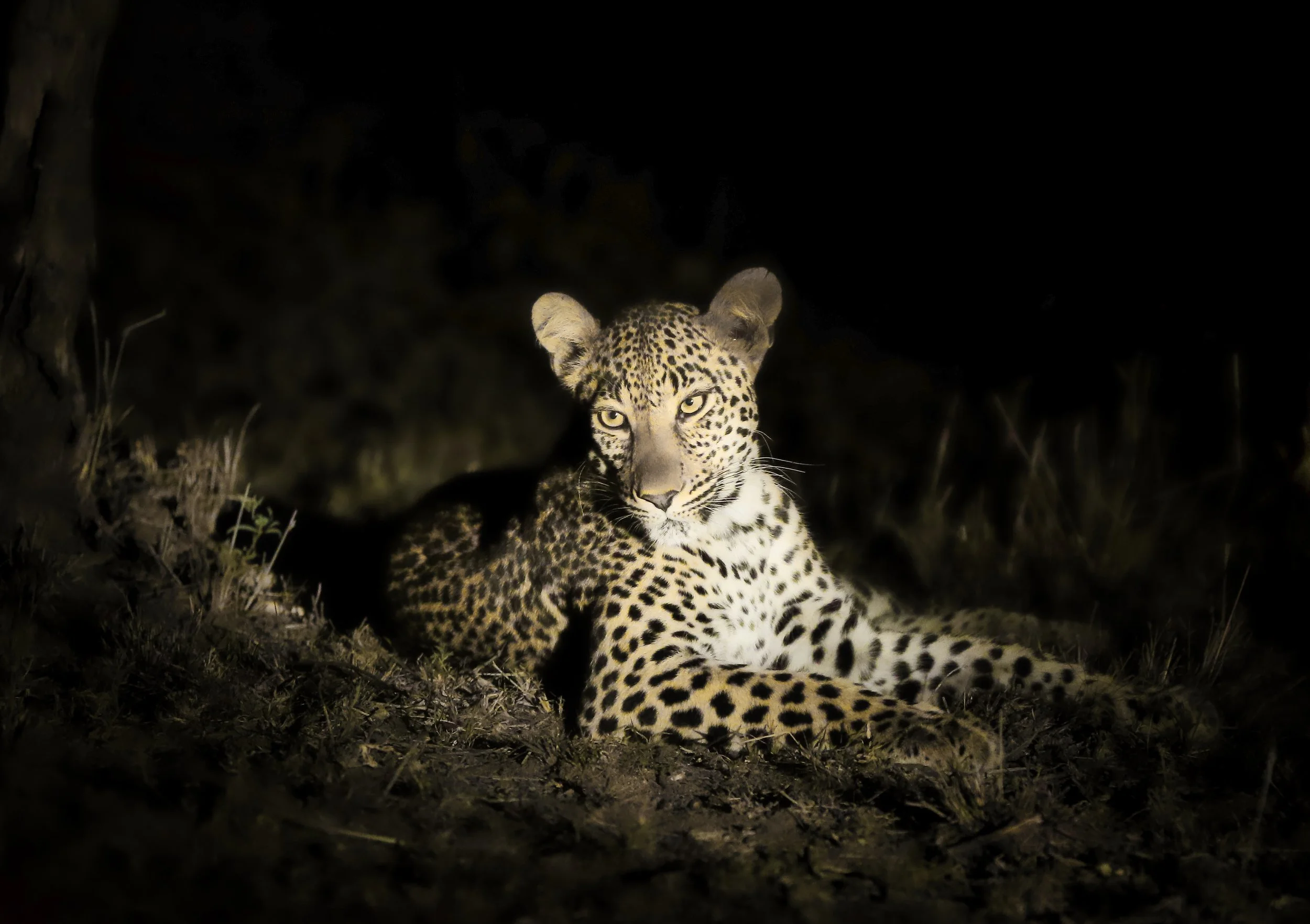
Wild big cats like leopards are often hurt or displaced by human incursion or human-wildlife conflict. Khaya Varindzi aims to be the first purpose-built facility to rescue, rehabilitate and rewild these remarkable creatures.
Photography: Drew Abrahamson
The problem most people don’t see
Public conservation narratives often centre on poaching or orphaned wildlife. While important, they obscure a more immediate issue: the fate of wild predators displaced through human–wildlife conflict.
When fencing fails, floods break boundaries, or habitat pressure intensifies, decisions must be made quickly. Yet the systems in place are rarely structured to support temporary ethical holding and relocation pathways. Even non-aggressive animals, with no history of livestock predation or human harm, can be destroyed simply because relocation logistics take time and suitable infrastructure does not exist.
Carl frames this starkly: “We’ve gone from half a million lions to about 20,000 in just the last 50 years. Leopards from roughly 850,000 to around 50,000. That velocity is terrifying.”
Despite this decline, wild predator displacement remains under-resourced. As Carl explains, “there’s nobody purely focused on the human–wildlife conflict aspect surrounding wild predators, mainly lion and leopard.”
A new benchmark in lion-centred conservation
One of the most critical aspects of Khaya Varindzi is what it is not. It is not a predator tourism attraction. It is not a long-term captive sanctuary designed around habituated animals. Instead, it’s a purpose-built wild holding and relocation facility, designed to keep displaced big cats unhabituated, behaviourally intact, and ecologically viable while suitable long-term placements are identified.
“This is not a sanctuary in the traditional sense,” Drew explains. “It’s a wild holding facility for animals to return to the wild. Finally, a facility developed to rewild animals, not to habituate them or exploit them for tourism.”
In practice, this means minimal human imprinting, restricted predator access, and protocols aligned with relocation outcomes rather than visibility or visitor experience. As Drew emphasises, “You’re not going to take a selfie with a lion. You’ll be lucky if you see it. The focus is keeping them wild.”
Why existing models aren’t enough
Many organisations do vital work rescuing big cats from circuses, private ownership, or captive breeding environments. That work remains critical. However, it addresses a different conservation challenge.
Captive big cats often come from compromised genetic lineages due to generations of inbreeding. Releasing such animals into wild ecosystems is rarely viable and can be ecologically harmful.
Carl is direct: “You can’t take captive cats with destroyed genetics and release them into a wild gene pool. We need to preserve what’s wild — the environment, the biospheres, the natural balance.”
By contrast, wild lions and leopards displaced through human–wildlife conflict still carry intact genetic value. When they are euthanised, conservation loses not just an individual life, but a functioning component of an already fragile gene pool.
Sand River Pride: the story that changed the mission
For Drew, the shift toward a singular focus on wild predators was shaped by lived experience.
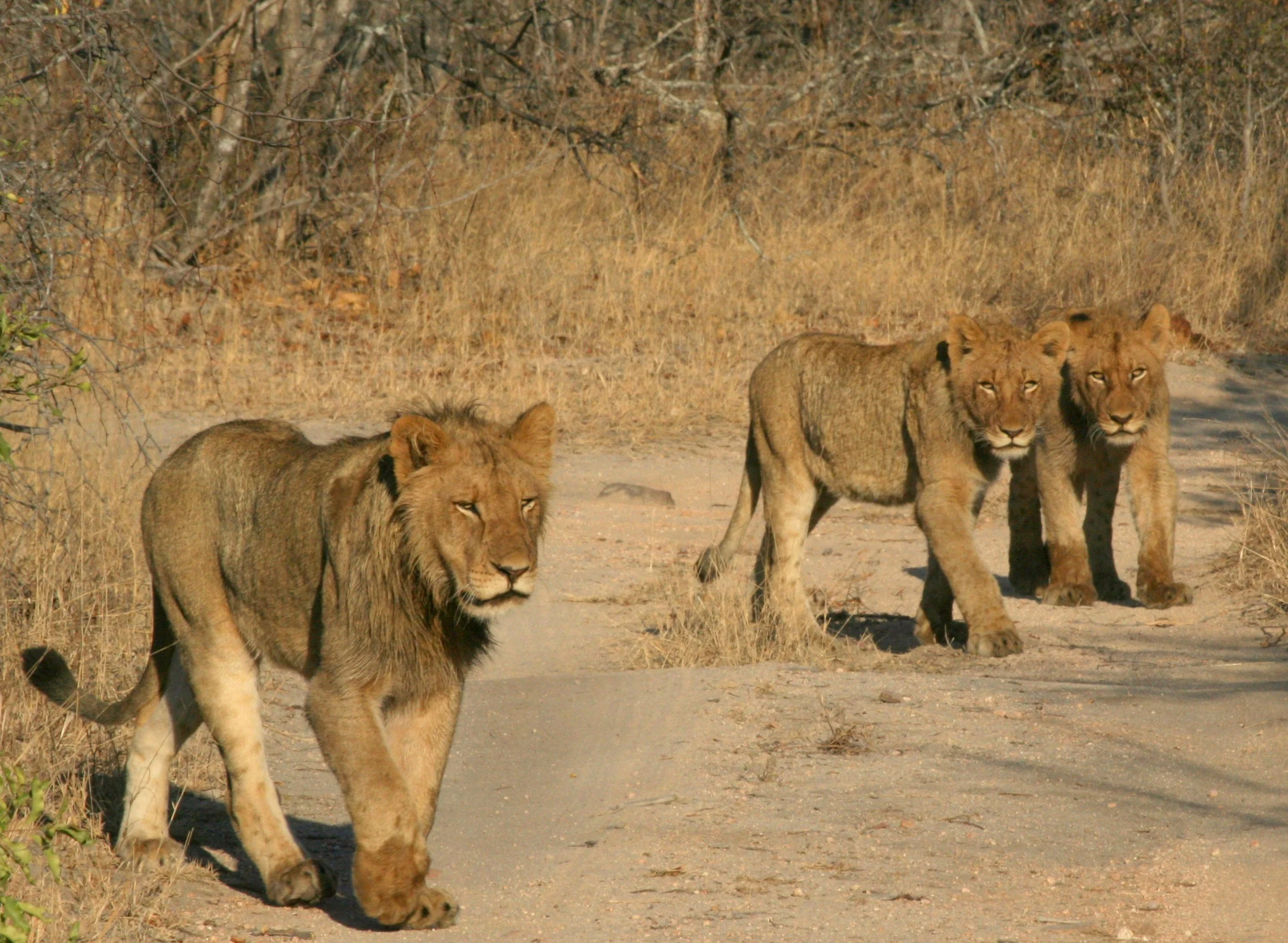
She recalls observing a lion pride along a reserve boundary that had lived peacefully within its territory for years. When flooding damaged fencing and the pride crossed into community land, the response was ultimately lethal, despite the animals not being problem predators.
“They weren’t killing livestock. They weren’t attacking people. But they got out, and they were tracked and shot,” she reflects.
Experiences like this underscored a critical conservation failure: without intermediary infrastructure, even non-problematic wild animals can be lost unnecessarily, simply because there is nowhere for them to go.
An integrated conservation ecosystem
What makes Khaya Varindzi unique is its integrated design. Designed as one of the most comprehensive lion-focused conservation hubs globally, it connects predator protection with security, research, education, and hyperlocal community development.
This includes wild big cat rescue and relocation, elite K9 anti-poaching and reserve security operations, community employment pathways, a conservation-focused eco-school, scientific research, ethical hands-off volunteering, and a sustainability-driven eco-lodge designed to support long-term operational resilience.
Positioned within a key Southern African predator stronghold, the co-founders hope it can also serve as a pilot model. As Carl notes, “This needs to be a module that can expand into neighbouring countries as well… a pilot project for human–wildlife conflict issues involving wild predators.”
Preserve what is still wild
At the heart of Khaya Varindzi’s philosophy is a clear and urgent principle: preserve what is still wild.
“You’re euthanising from a population that is a fraction of what it should be,” Carl explains. “You’re removing genetics from a wild population that is already critically reduced.”
For the founders, the stakes are ethical, ecological, and scientific.
As Drew puts it: “If we’re going to have big cats in South Africa — anywhere — in the future, this project is key to making that a reality.” The project is in its foundational stage, but its promise for both predators and people is undeniable.